EPDM Rubber Roofing Nottingham
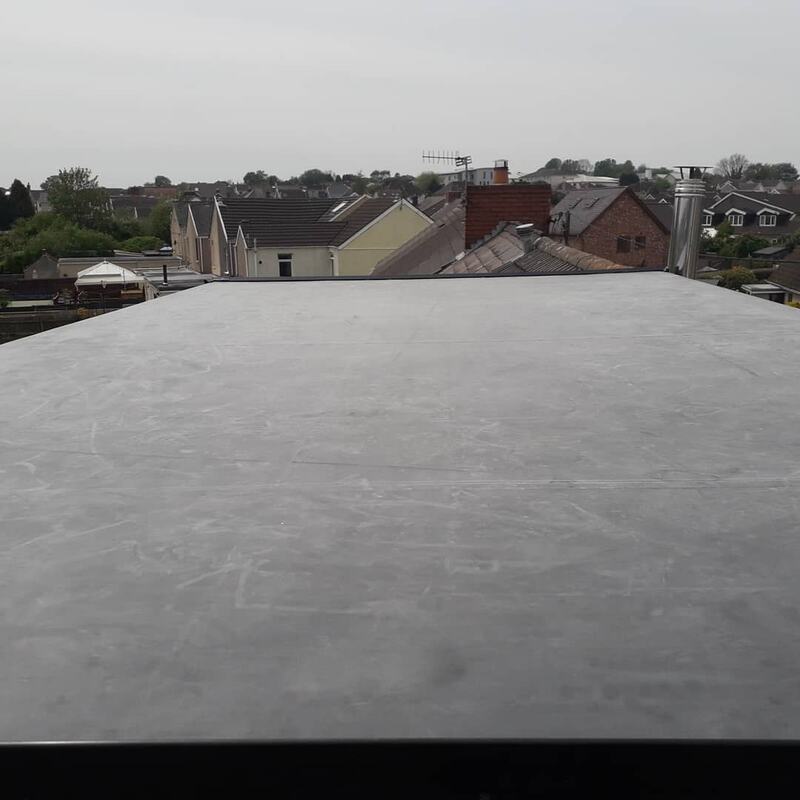
EPDM Rubber Roofing in Nottingham – Professional Flat Roof Installation, Repair & Replacement
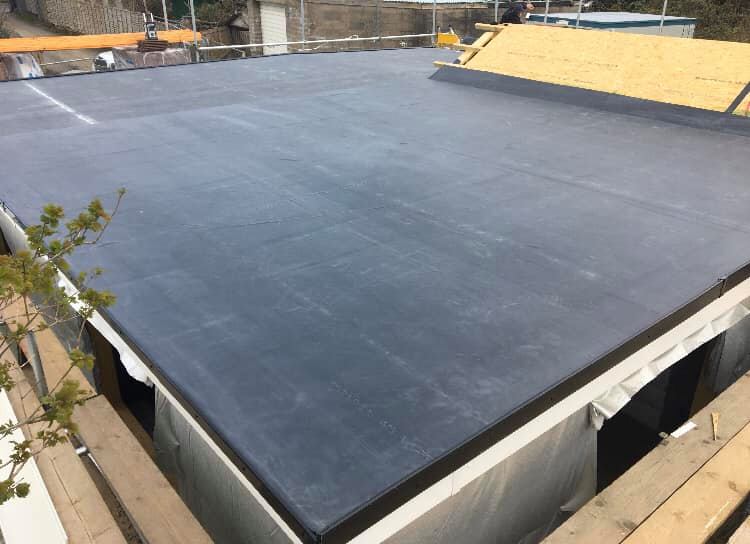
We install EPDM rubber roofing in Nottingham on house extensions, garages, porches, and outbuildings.
EPDM is a single-ply rubber membrane that bonds directly to your roof deck and lasts for decades with very little upkeep.
In Nottingham, wet winters and freeze-thaw cycles take a heavy toll on older felt roofs.
EPDM handles those conditions well — it stays flexible in the cold and won't crack or blister in summer heat.
We cover the full process: new installations, replacements, and repairs. Plus all other types of roofing in Nottingham
Our team surveys your roof, prepares the deck properly, and installs the membrane in one visit for most residential jobs.
With over 20 years of building and roofing experience across Nottinghamshire, we know what these local properties need — and we do the job right, first time.
Call us on 0115-647-0560 for a free consultation and quote.
FREE Drone Roof Survey & Assessment of your current flat roof. See the condition of your roof for yourself.
What Is EPDM Rubber Roofing and How Does It Work?
EPDM stands for Ethylene Propylene Diene Monomer. It is a synthetic rubber membrane made for flat and low-slope roofs. The rubber sheet bonds to your roof deck using a specialist cold-applied adhesive — no flames, no torches.
Most residential roofs in Nottingham use a single piece of EPDM cut to fit. Fewer joins means fewer places for water to get in. The membrane seals tight around edges, upstands, and any pipes using seam tape and flashing trim.
EPDM is the most widely used flat roofing membrane in the UK. It is used across Nottingham on the flat roofs of rear extensions, garages, garden rooms, porches, and dormers. It suits both new-build flat roofs and replacements over existing decking.
What makes EPDM different to older flat roof materials:
- Applied cold — no naked flame needed on your property
- Single large sheet covers most roofs without mid-roof joins
- Stays flexible from below freezing to summer heat
- Does not support moss or algae growth the way felt does
- Fully recyclable at the end of its life
- Resistant to UV rays, ozone, and acid rain — no top coat needed
- Lightweight — adds minimal load to your existing roof structure
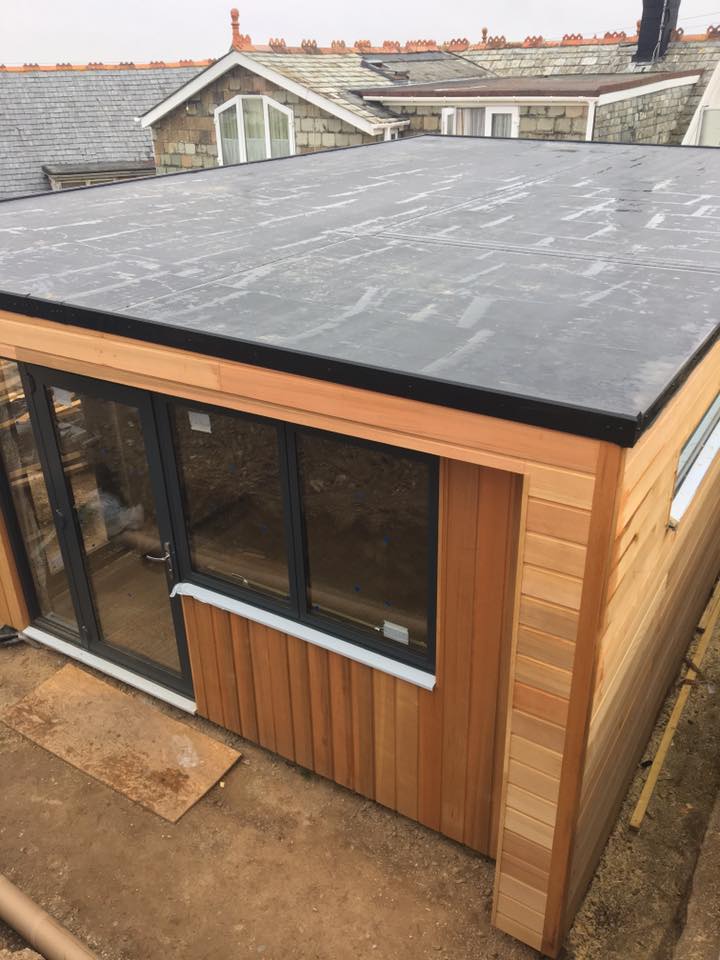
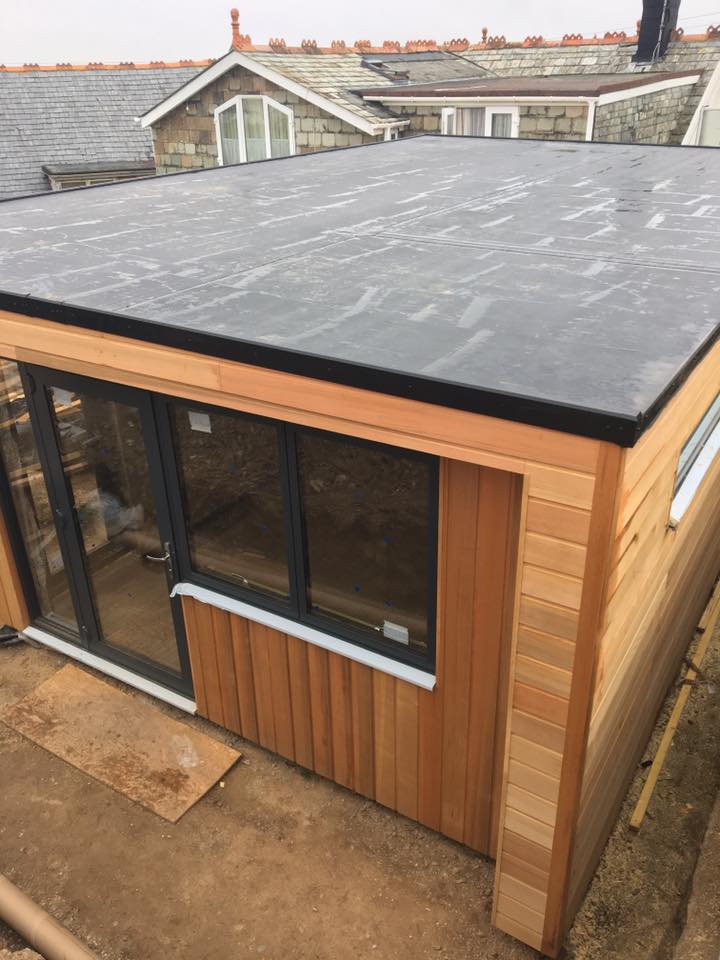
Why EPDM Outperforms Felt on Flat Roofs in Nottingham
Felt has been used on Nottingham flat roofs for decades, but it degrades faster than most homeowners expect. Bitumen felt dries out, cracks, and splits — especially after a cold Nottinghamshire winter followed by a dry summer.
EPDM is a different material entirely. It expands and contracts with your building without tearing. It resists UV rays without coating and sheds water reliably year after year.
Unlike torch-on felt, EPDM is applied using cold adhesive — making it safer to install on occupied properties and reducing the risk of fire.
EPDM vs Felt — At a Glance
Lifespan EPDM lasts 50+ years. Felt typically lasts 10–20 years before it needs replacing.
Maintenance EPDM needs very little attention — a visual check twice a year is all that is needed. Felt requires regular maintenance and is prone to cracking, splitting and lifting.
Installation Method EPDM is applied cold using adhesive — no flame, no torch, no fire risk. Felt uses a torch-on process which carries a fire risk during installation.
Moss and Algae EPDM naturally resists moss and algae growth. Felt is susceptible to moss and algae, which speeds up deterioration.
Insulation Compatibility EPDM works with both warm roof and cold deck build-ups. Felt is suited to cold deck construction only.
Seams and Leak Risk EPDM is installed as a single sheet with few or no mid-roof joins. Felt has multiple overlapping layers — each join is a potential leak point.
Environmental Impact EPDM is fully recyclable and has a low-impact production process. Felt is not recyclable and has a higher environmental footprint.
When you replace an old felt roof on a Nottingham extension, EPDM is the upgrade that stops the same problem coming back in another decade.
Is EPDM Suitable for Your Property?
EPDM rubber roofing works on a wide range of residential structures across Nottingham and Nottinghamshire. If your property has a flat or low-pitched roof, EPDM is almost certainly a suitable solution.
Common applications we install in the Nottingham area include:
- Rear extensions and single-storey extensions
- Double-storey extension flat roof sections
- Garages — both attached and detached
- Garden rooms, home offices, and outbuildings
- Porches and canopies
- Dormers and flat roof sections on loft conversions
- Orangeries with flat roof sections
- Commercial and light-industrial flat roofs
If you're not sure whether EPDM is the right material for your roof, call us on 0115-647-0560 and we'll give you a straight answer — no sales pitch.
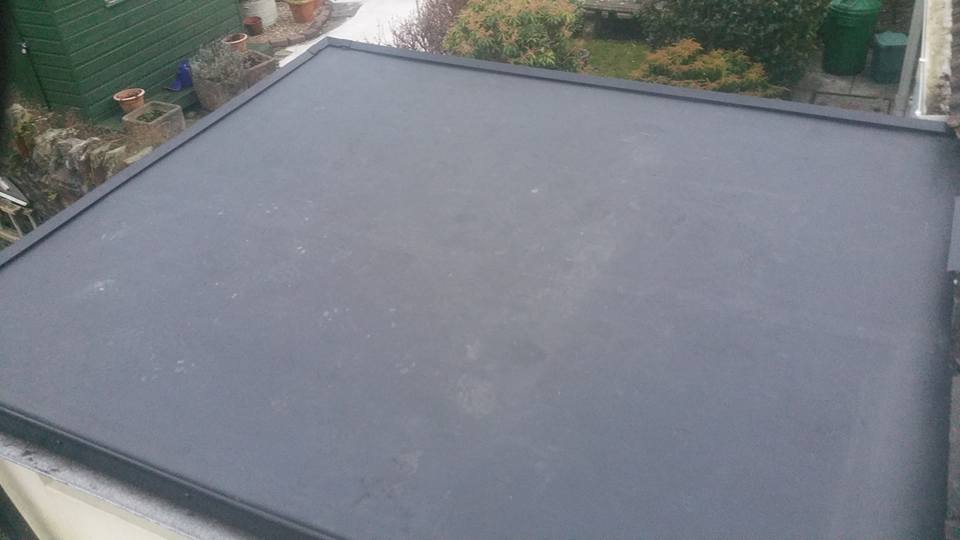
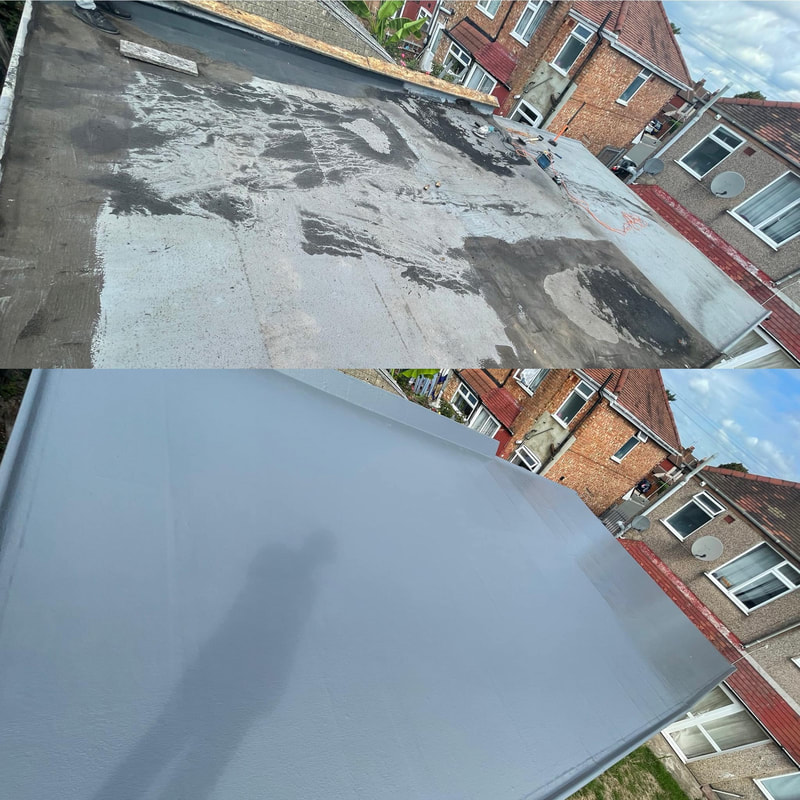
How to Choose the Right EPDM Thickness for Your Roof
EPDM membranes come in two main thicknesses for residential use: 1.2mm and 1.5mm. The right choice depends on what your roof is used for and how much load it needs to bear.
For most house extensions, garages, and garden rooms across Nottingham, a 1.2mm membrane is the standard choice. It gives solid waterproofing performance for a standard flat roof with light maintenance access only.
A 1.5mm membrane is the better choice when:
- Your roof will carry a sedum or green roof layer
- The surface will have regular foot traffic (roof terrace or accessible flat roof)
- You are installing solar panels on a flat roof structure
- The building is commercial or has a larger span
- The roof area is larger than 50 square metres
- The property is exposed to high winds — common on taller buildings in Nottingham city centre
Properties in West Bridgford and Wollaton sometimes have larger rear extensions or outbuildings where the 1.5mm membrane is more appropriate. We will advise the right spec when we survey your roof — there is no charge for the visit or the quote.
Warm Roof vs Cold Roof — Which Build-Up Is Right for You?
This is a question we get asked regularly by Nottingham homeowners planning an extension or replacement flat roof. The answer affects your insulation, energy efficiency, and long-term performance.
Warm Roof (Recommended)
In a warm roof build-up, the insulation sits above the roof deck — between the deck and the EPDM membrane. This is the method we recommend for most new installations.
Benefits of a warm roof:
- Keeps the deck structure warm — reduces condensation risk
- Better thermal performance — helps reduce heating bills
- Meets current Building Regulations for insulation values (Part L)
- No vapour barrier required in most cases
Cold Roof:
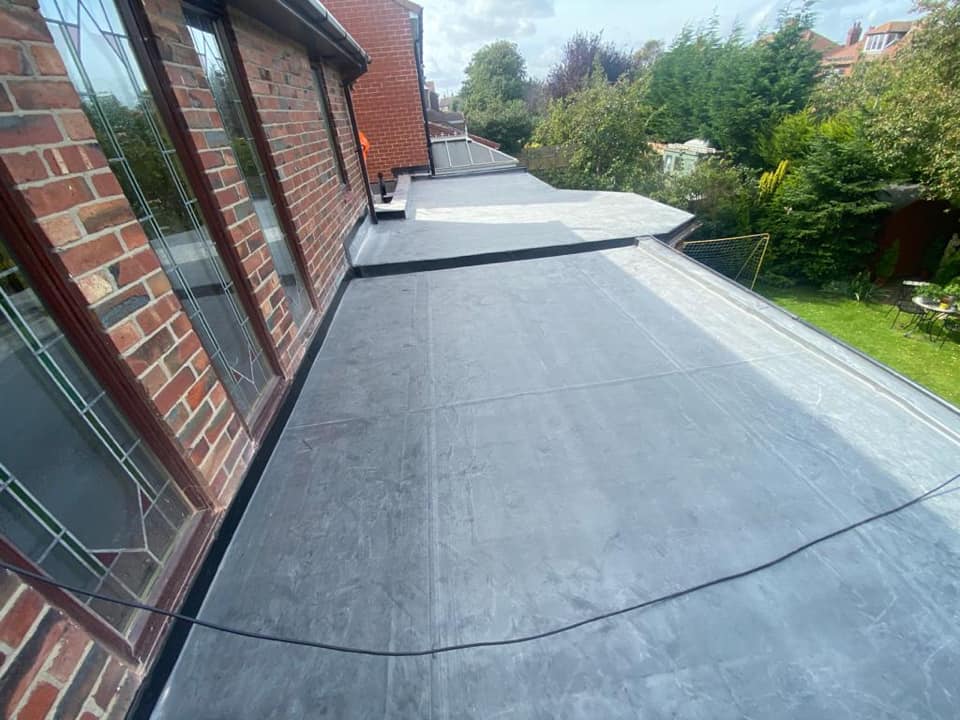
In a cold roof, the insulation sits between the joists, below the deck. This is an older method and is still acceptable in some situations, but warm roof is generally the preferred approach for new builds and full replacements.
When replacing an existing cold roof flat roof in Nottingham, we will advise whether converting to a warm roof build-up is practical and worthwhile for your property.
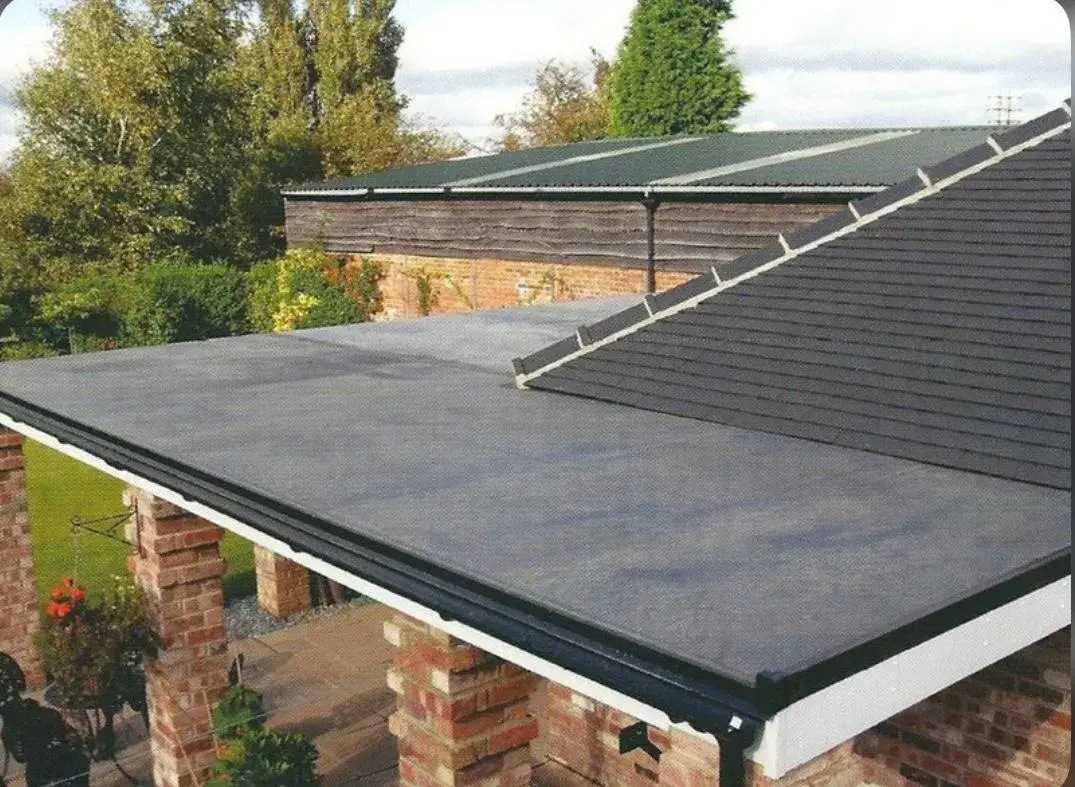
How Our Nottingham Team Installs EPDM Rubber Roofing
Most residential EPDM jobs in Nottingham complete in a single day. The process is straightforward when the deck is in good condition and the roof has been properly surveyed beforehand.
Our Installation Process
- Survey — We inspect the existing deck and structure before we quote. We check for rot, damp, or movement in the timber.
- Deck preparation — Any damaged OSB or plywood boards are replaced. The surface must be clean, dry, and flat before the membrane goes down.
- Damp proof membrane — A DPM layer is fixed to the new deck boards where required.
- Insulation — Rigid insulation boards are fitted on top where a warm roof build-up is specified.
- Membrane lay — The EPDM sheet is rolled out and left to relax for 30 minutes. It is then bonded to the deck using cold-applied contact adhesive.
- Edge and detail work — Perimeter trims, drip edges, and upstand flashings are sealed using seam tape and primer. All penetrations (pipes, vents) are sealed individually.
- Final check — We walk the finished roof and check every seam and edge before we leave.
- Clean up — We remove all waste, old felt or membrane, and leave your property tidy.
We cover Nottingham and the surrounding areas including Beeston, Hyson Green, Arnold, Carlton, and West Bridgford.
How to Spot and Fix a Leaking or Bubbling Rubber Roof
If your flat roof is leaking or you can see the membrane lifting, it is worth getting it looked at quickly. Most EPDM problems are repairable without a full replacement — but leaving them will shorten the roof's life.
Common Signs Your EPDM Roof Needs Attention
- Bubbling or lifting — Usually caused by moisture or air trapped under the membrane during installation, or adhesive that was not given time to flash off correctly. Small bubbles often settle over time, but large areas of lifting need re-bonding.
- Visible tears or punctures — Can happen from sharp debris, foot traffic without protective pads, or falling branches. Most small tears are repaired with EPDM flashing tape and primer.
- Leaking at the edges or around a pipe — Usually a seam or trim failure rather than a problem with the main membrane sheet. We reseal the affected detail rather than replacing the whole roof.
- Seam separation — Where two sheets join, or where the membrane meets a wall upstand, the tape can fail if the surface was not properly primed at installation.
- Ponding water — Water sitting on the roof for more than 48 hours after rain suggests the deck has no adequate fall. This needs a structural fix, not just a membrane patch.
- Shrinkage or membrane pulling away from edges — This happens on older EPDM roofs as the membrane ages. It exposes the edges and allows water to track underneath.
- Damp patches on ceilings below the flat roof — Always a sign that water has already breached the membrane. Don't wait — call us.
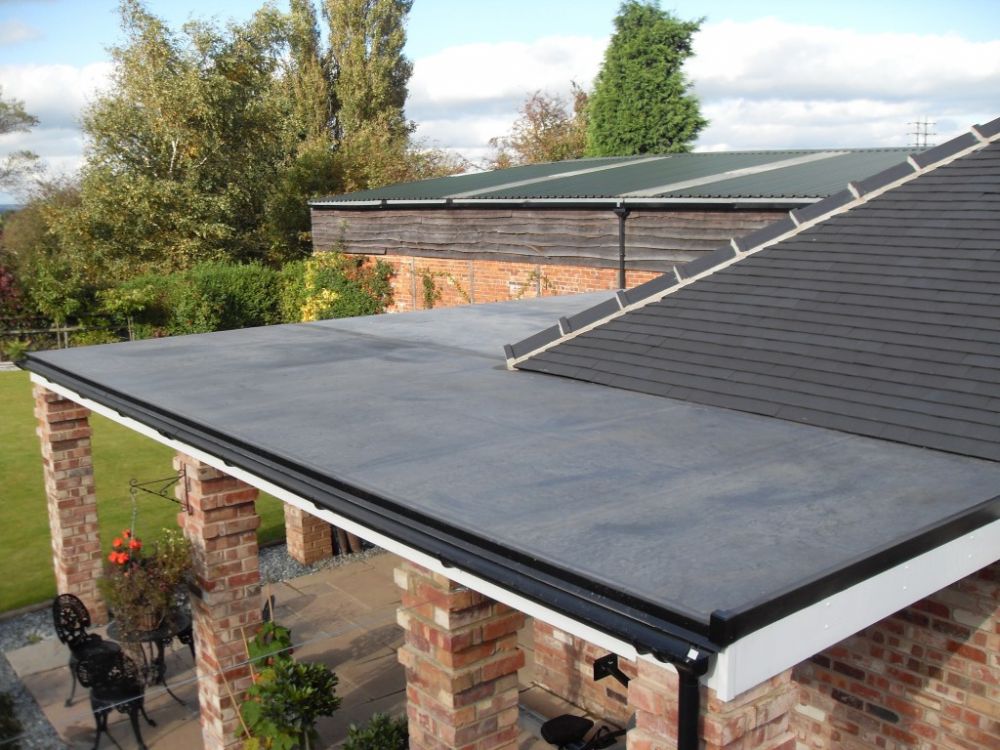
Nottingham's freeze-thaw cycle in winter puts extra stress on any detail that was poorly installed. If you have an older flat roof that has started to show any of these signs, call us on 0115-647-0560 and we will take a look.
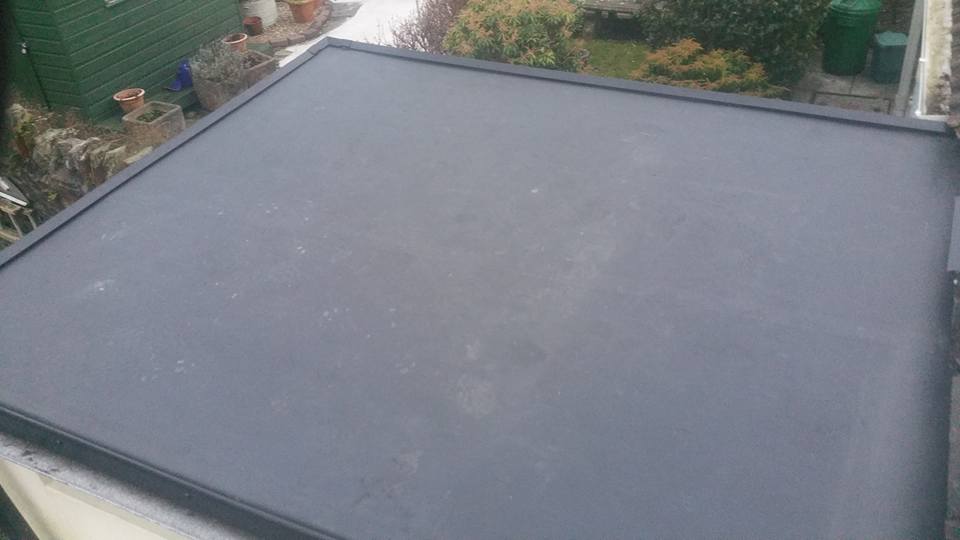
How Long an EPDM Roof Lasts and How to Protect It
A correctly installed EPDM roof has a lifespan of over 50 years. The membrane itself is resistant to UV, ozone, and standing water. It does not dry out, crack, or split the way felt does over time.
The main threat to an EPDM roof is not the weather — it is physical damage from debris or foot traffic and poor maintenance of the edge details.
How to Keep Your EPDM Roof in Good Condition
- Inspect it twice a year — spring and autumn work well in Nottingham
- Clear leaf debris and standing water after autumn storms
- Keep gutters and downpipes clear so water drains off the roof properly
- If you need to walk on it for maintenance, use protective boards or walkway pads
- Check the edge trims and flashings after any severe weather
- Do not allow oil, grease, or petroleum-based products to contact the membrane — these will degrade EPDM over time
- If you have solar panels on the roof, check the flashings around the fixings annually
Properties in Arnold and Carlton often have mature trees nearby. Leaf build-up on a flat roof through October and November is worth clearing before the first hard frost.
If you spot a problem during your inspection, call us before it becomes a bigger repair. Most issues caught early are straightforward to fix and do not require a full re-roof.
EPDM Rubber Roofing and Building Regulations in Nottingham
Flat roofing work in Nottingham is subject to Building Regulations in certain circumstances. Here is what you need to know:
- Replacing a flat roof like-for-like on an existing structure — generally does not require planning permission, but Building Regulations approval may still apply if you are improving insulation values.
- New flat roofs as part of a house extension — will require Building Regulations sign-off. This covers structural loading, insulation (Part L), and fire spread (Part B).
- Flat roofs on outbuildings and garages — usually exempt from Building Regs if the building is under a certain floor area and not used for sleeping.
As a full-service building and roofing contractor in Nottingham, we manage the Building Regulations process as part of your project. You won't need to chase paperwork — we handle it.
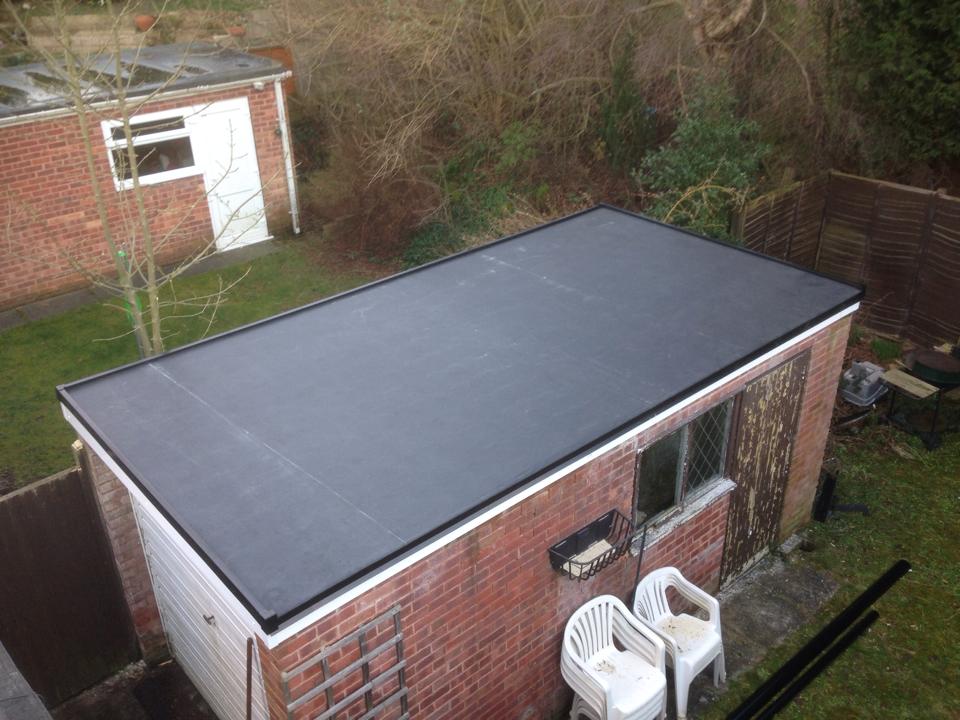
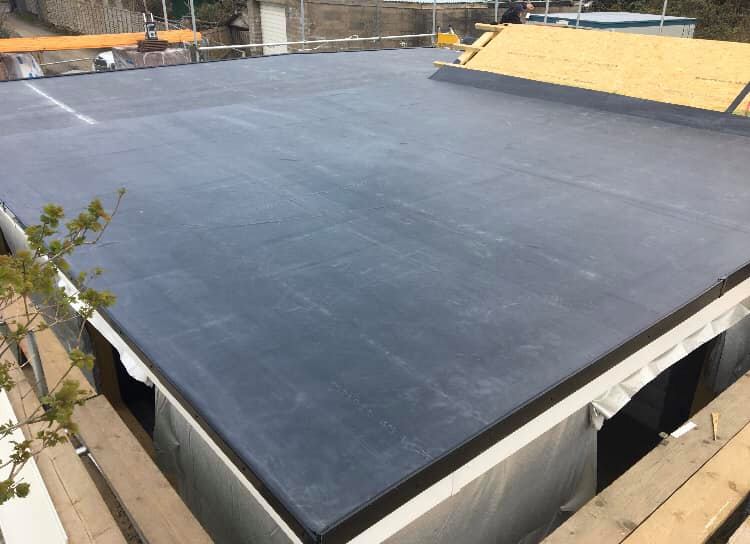
Why Choose Nottingham House Extensions for Your EPDM Roof?
There are plenty of roofing companies in Nottingham. Here is what makes us different:
- Over 20 years of experience in residential building and roofing across Nottinghamshire
- Full-service contractor — we handle everything from deck preparation to final inspection
- We install EPDM as part of new house extensions, garage conversions, and loft conversions — not just as a standalone roofing trade
- Transparent quotations — no hidden costs, no nasty surprises
- Free survey and free quote — we come to you
- We work across Nottingham city and the wider Nottinghamshire area
- All work carried out to current Building Regulations standards
Call 0115-647-0560 or fill in our contact form to arrange your free roof survey.
Ready to Book Your Free EPDM Roof Survey in Nottingham?
If your flat roof is leaking, bubbling, or simply coming to the end of its life — now is the right time to act. Leaving a failing flat roof will only lead to more expensive repairs down the line, including potential water damage to your ceilings, walls, and timber structure.
Nottingham House Extensions offer:
- Free roof survey — we come to you, no obligation
- Free, transparent quotation — no hidden costs
- Full installation, repair, and replacement service
- Building Regulations compliance handled for you
- Over 20 years of local building and roofing experience in Nottinghamshire
Call us today on 0115-647-0560 or use our contact form to arrange your free survey. We work across Nottingham and all surrounding areas — and we'd love to help you get a roof that lasts.
Areas We Cover for EPDM Rubber Roofing in Nottingham
We install and repair EPDM rubber roofing across Nottingham city and the wider Nottinghamshire area. Below are the main towns and postcodes we serve:
- Nottingham City Centre — NG1
- West Bridgford — NG2
- Mapperley and St Ann's — NG3
- Carlton and Gedling — NG4
- Arnold and Sherwood — NG5
- Bulwell and Basford — NG6
- Hyson Green and Lenton — NG7
- Wollaton and Bilborough — NG8
- Beeston and Stapleford — NG9
- Long Eaton — NG10
- Clifton and Wilford — NG11
- Ruddington and Edwalton — NG12
- Bingham and Vale of Belvoir — NG13
- Southwell and Epperstone — NG14
- Hucknall and Ravenshead — NG15
- Eastwood and Kimberley — NG16
- Mansfield and Kirkby-in-Ashfield — NG17 and NG18
- Newark-on-Trent — NG24
Not sure if we cover your area? Call us on 0115-647-0560 and we will confirm straight away.
Nottingham House Extensions
FREE Design Consultation and FREE Quotation
Call Now on
Nottingham House Extensions
Professional Building & Roofing Services
FREE Design Consultation and FREE Quotation
Call Now on 0115-647-0560
Get Your Free, No-Obligation Quote
Tell us a bit about the job and we'll come back to you with honest advice and a free quote — usually within 24 hours.
Or call 0115-647-0560
Get My Free Quote
Frequently Asked Questions — EPDM Rubber Roofing in Nottingham
What is EPDM roofing and is it any good?
EPDM (Ethylene Propylene Diene Monomer) is a synthetic rubber membrane used on flat and low-slope roofs. It is widely regarded as the most reliable flat roofing material available for UK residential properties — it outperforms felt significantly in durability, weather resistance, and lifespan.
How long does an EPDM rubber roof last in the UK?
A correctly installed EPDM roof lasts over 50 years. The membrane resists UV, ozone, freeze-thaw cycles, and standing water. Most manufacturers provide a material warranty of 20 years, though the product itself will outlast that by a considerable margin.
Is EPDM better than GRP fibreglass roofing?
Both are significantly better than felt. GRP (fibreglass) produces a rigid, seamless surface and suits roofs with complex shapes. EPDM is more flexible — better for roofs with movement or temperature variation. We will recommend the right material for your specific roof when we survey it.
Can I get EPDM rubber roofing fitted on my Nottingham extension?
Yes — EPDM is suited to flat and low-slope roofs on single and double-storey extensions across Nottingham and Nottinghamshire. We install new builds and replacements.
Can EPDM be laid over my existing felt roof?
Sometimes. If the deck and the felt underneath are both in sound condition, a fleece-backed EPDM membrane can go over the top. In most cases we recommend stripping back to the deck so we can check the timber beneath — a wet deck under new rubber will cause problems later.
How do I know if my rubber roof needs a repair or full replacement?
Small tears, edge failures, and loose flashings are usually repairable. If the deck has rotted, the membrane has widespread seam failure, or the roof has been leaking for a long time, replacement is the better option. We will tell you honestly which is needed when we survey the roof.
Can you walk on an EPDM rubber roof?
Light foot traffic is fine for occasional maintenance. If you need regular access — for example, to clean windows or reach plant equipment — we recommend fitting protective walkway pads to spread the load and protect the membrane.
Does fitting a new EPDM roof on my extension need planning permission in Nottingham?
Like-for-like flat roof replacements on existing structures generally do not need planning permission. New flat roofs forming part of a house extension will need building regulations sign-off. We work alongside your project from the groundwork stage, so this is covered as part of the build.
How quickly can you fit an EPDM rubber roof in Nottingham?
Most standard residential jobs complete in one day. We cover Nottingham city and the surrounding towns and can usually schedule a survey within a few days of your call.
What thickness of EPDM membrane do I need?
For most residential extensions, garages, and outbuildings in Nottingham, 1.2mm is the standard choice. For accessible roofs, green roofs, solar installations, or larger commercial spans, 1.5mm is recommended. We specify the right thickness when we survey your roof — at no cost to you.
Does EPDM roofing need maintenance?
Very little. We recommend a visual inspection twice a year — spring and autumn — and clearing any leaf debris or standing water. Check the edge trims after severe weather. Beyond that, a correctly installed EPDM roof largely looks after itself.
Is EPDM rubber roofing eco-friendly?
Yes. EPDM has a low environmental impact during production, a long service life that reduces the frequency of replacements, and is fully recyclable at the end of its life. It does not leach harmful chemicals into rainwater runoff.