Felt Roofing Nottingham — Properly Installed, Built to Last
If you have a felt roof on your garage, extension, porch, or outbuilding in Nottingham, this page is for you. Felt roofing remains one of the most common flat roof systems across the city — and one of the most misunderstood.
Some homeowners patch a roof that needs replacing. Others replace a roof that could have been repaired. We help you avoid both mistakes.
At Nottingham House Extensions, we install, repair, and re-felt roofs across Nottingham and Nottinghamshire.
We have over 20 years of hands-on experience working on local roofs and properties — from post-war semis in Bulwell to Victorian terraces in Mapperley and new-build extensions in Beeston. We also cover commercial felt roofing in the local area.
Every job starts with a FREE drone roof survey, and you receive a written quote before any work begins.
Call 0115-647-0560 to book your free drone roof survey and assessment today.
Why Nottingham Homes Have So Many Felt Roofs
Nottingham has one of the largest stocks of post-war housing in the East Midlands. Thousands of properties built between the 1950s and 1980s — across Clifton, Sherwood, Wollaton, Arnold, and Hucknall — were fitted with flat-roofed garages, rear kitchen extensions, lean-to porches, and bay window roofs as standard.
Felt was the go-to system for all of these structures. It still is — when it is specified and installed correctly.
Many of those original roofs are now at or near the end of their working life. A felt roof that was laid 15 to 20 years ago without regular maintenance is unlikely to see another winter without problems. Water that sits inside a roof structure through one cold Nottinghamshire winter can cause timber decay that costs far more to put right than the roof itself.
We work on felt roofs across Nottingham every week. We know exactly what the common failure points are on local housing types, and we will give you a straight, honest assessment — not a sales pitch. If you have any other type of roof that needs attending to or replacing then please go to our main roofing page at https://www.nottinghamhouseextensions.co.uk/new-roofs.html
What Is Felt Roofing? A Plain-Language Explanation
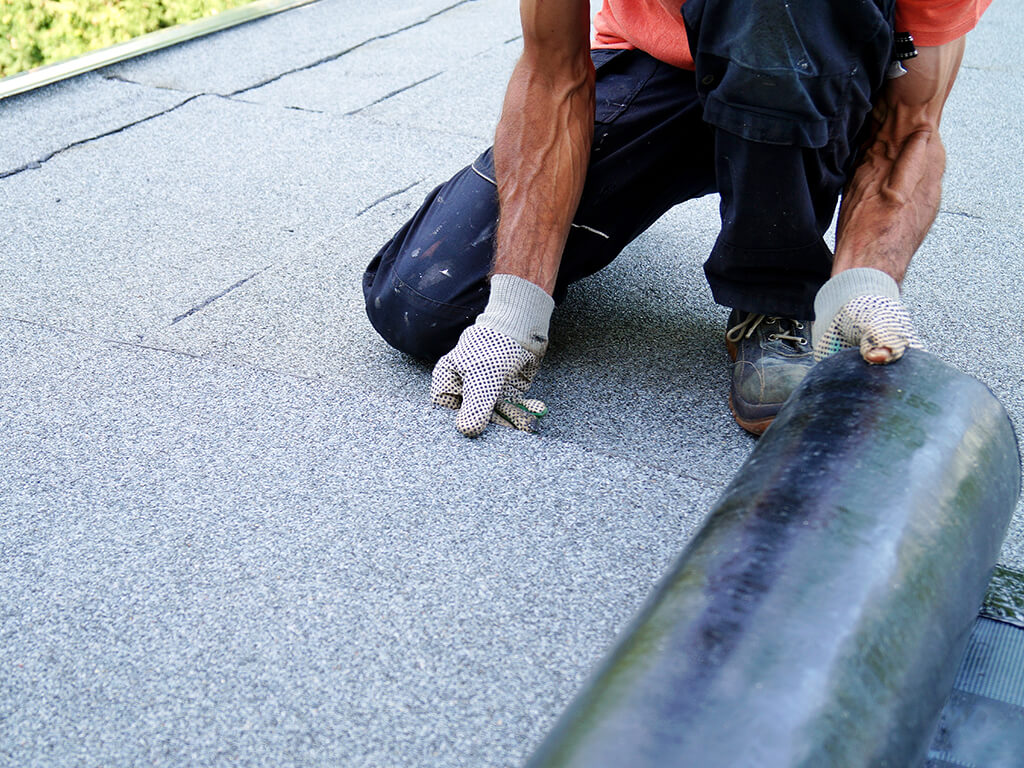
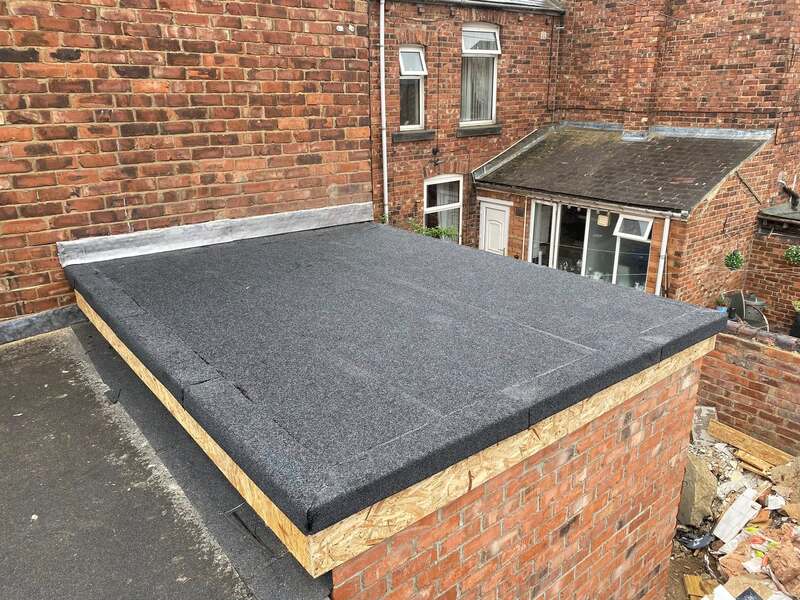
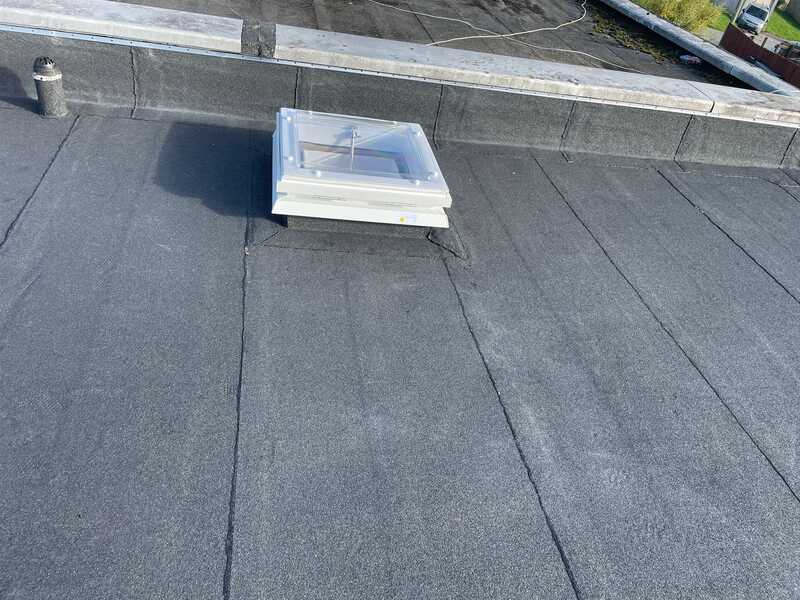
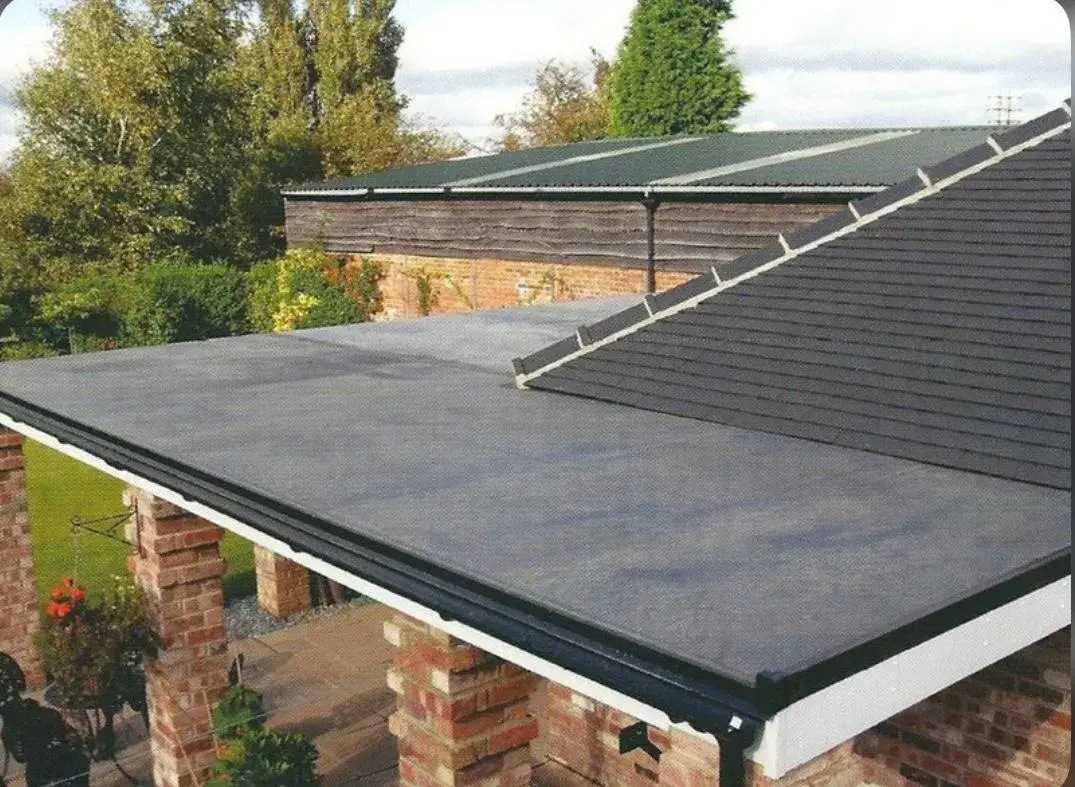
Felt roofing — also called bitumen roofing or torch-on felt — is a layered flat roof system made from bitumen-modified membranes reinforced with polyester or fibreglass matting. The layers are bonded together and fused to the roof deck to create a continuous, waterproof surface.
It is used on:
- Flat and low-pitch garage roofs
- Single-storey rear and side extensions
- Porch and lean-to roofs
- Bay window roofs
- Outbuildings and garden rooms
Modern torch-on felt systems are a significant step forward from the older single-layer felt that many people picture. They use modified bitumen — either SBS or APP modified — which is more flexible, more resistant to UV breakdown, and better suited to the freeze-thaw conditions of a Nottinghamshire winter.
Torch-On Felt vs Standard Felt — What the Difference Actually Means
Not all felt roofing performs the same way. This is one of the most important things to understand before agreeing to any roofing work.
Standard (Traditional) Felt
Traditional felt is bitumen-saturated material that is cold-bonded or nailed to the roof deck. It is still used on garden sheds and small outbuildings where budget is the only consideration. On a garage, porch, or house extension, it is not what we recommend. It has a shorter lifespan, degrades faster under UV exposure, and is more likely to crack at seams during Nottingham's freeze-thaw winters.
Torch-On Felt (Modified Bitumen)
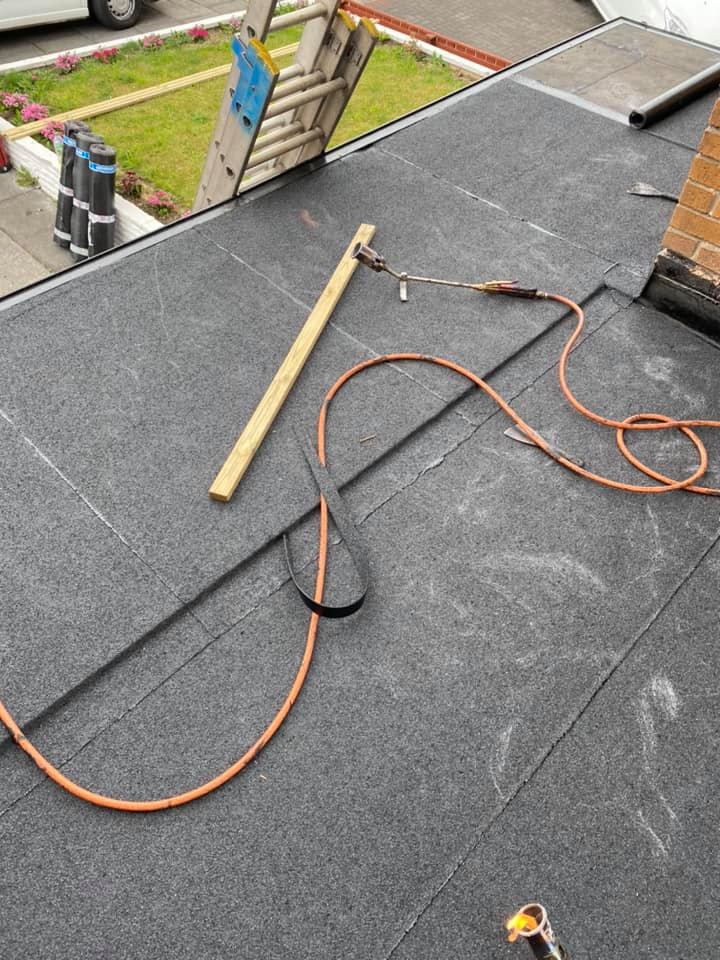
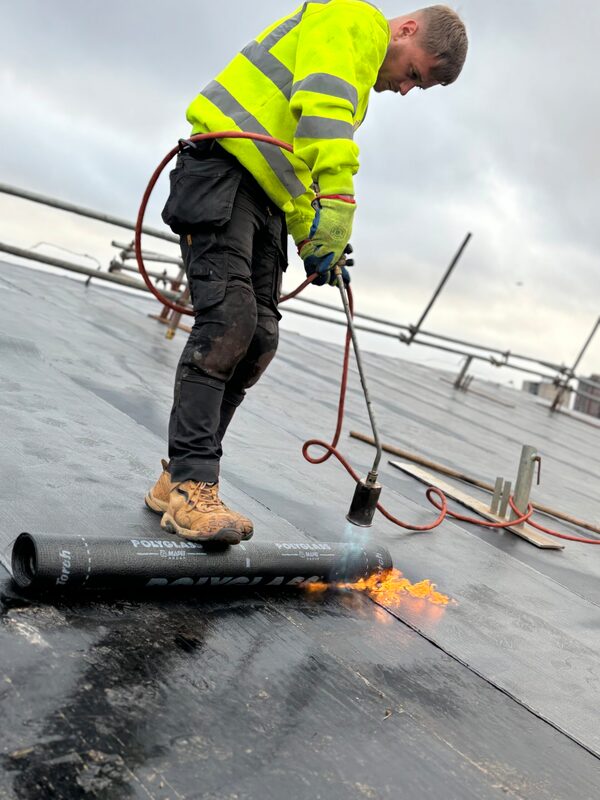
Torch-on felt is the current industry standard for flat roof installations. Modified bitumen membranes are fused to the deck and to each other using a gas torch, creating a fully bonded, seamless waterproof barrier with no cold joins or loose edges.
A correctly installed three-layer torch-on system with a quality mineral cap sheet will typically last 15 to 25 years in Nottinghamshire's climate — and significantly longer with basic annual maintenance.
We specify quality materials on every job. You get a proper roof, built to last — not a quick fix that fails within a few years.
What is the difference between standard felt roofing and a torch-on felt system?
Standard felt is cold-bonded or nailed to the deck and typically lasts 10–15 years. Torch-on felt uses modified bitumen layers fused together with heat, creating a fully bonded waterproof barrier with stronger seams, better UV resistance, and improved flexibility in cold weather. For any garage, extension, or porch roof in Nottingham, torch-on is the system we recommend and install.
How do I know if my felt roof needs repairing or replacing completely?
If the damage is in one localised area and the decking beneath is dry and solid, a repair is usually the right option. If the felt is cracked across the surface, the roof has been patched multiple times without success, or the decking is water-damaged, a full re-felt gives far better long-term value. We survey every roof before advising — we never guess.
Why is my felt roof blistering, and what should I do?
Blisters form when moisture or air becomes trapped beneath the felt layers — either during installation or as the felt deteriorates over time. Small blisters on an otherwise sound roof can sometimes be repaired. Widespread blistering across the surface usually means the roof needs re-felting. Do not ignore blisters — if they burst, water enters the roof structure directly and timber damage follows quickly.
How long will a felt flat roof last on a garage or house extension?
A torch-on felt system installed with quality materials typically lasts 15 to 25 years on a garage or extension in Nottingham. The lifespan depends on installation quality, drainage fall design, material grade, and whether the roof receives basic annual maintenance. Traditional single-layer felt on a small shed may last 10 to 15 years.
Is felt roofing still worth choosing, or are EPDM and GRP better now?
Felt remains a proven, practical option for garages, outbuildings, and smaller flat roofs where budget matters. For a new house extension where longevity and minimal maintenance are the priority, EPDM rubber or GRP fibreglass may offer better long-term value. We install all three systems and give you an honest comparison at survey stage — there is no pressure to choose the most expensive option.
What maintenance does a felt roof need to make it last longer?
Clear the surface and gutters every autumn, check seams and flashings after winter frosts, and have a professional inspection every two years. Avoid pressure washing. Act on small leaks immediately rather than leaving them. A UV-resistant coating applied to a clean, sound surface can also extend the working life of an ageing felt roof by several years.
Can a felt roof be walked on without causing damage?
Light foot traffic on a torch-on felt roof with a solid deck is generally manageable, but felt is not designed as a regular walking surface. Avoid putting weight on areas where the deck may be soft or the felt is near end of life. If you need regular access to a flat roof — for maintenance, for example — a GRP fibreglass surface is the more appropriate system.
What are the most common reasons a felt roof fails early?
Poor installation is the leading cause — specifically cold joins, inadequate seam bonding, and incorrect drainage falls that allow water to sit on the surface. Using low-grade materials, skipping deck checks before re-felting, and poor edge detailing at upstands and flashings are also frequent causes of early failure. Regular maintenance significantly reduces the risk of premature failure.
How quickly can a felt roof be installed, and will it disrupt my day?
Most domestic felt roof installations on garages and extensions in Nottingham are completed within one day. Larger or more complex roofs may take two days. Disruption is minimal — we work on the roof externally and leave the site clean at the end of every day. We also schedule felt work during dry weather conditions for the best possible bond.
Do I need planning permission to re-felt a flat roof in Nottingham?
Like-for-like re-felting is generally permitted development and does not require planning permission. If your property is in a conservation area — such as parts of West Bridgford, The Park Estate, or Mapperley Park — or if you are changing the roof's form or height, you may need to check with Nottingham City Council Building Control. We advise you on this as part of the survey process.
Is felt roofing waterproof?
Yes — a correctly installed felt roof is fully waterproof. Modern torch-on systems use multiple bonded layers of bitumen-modified membrane to create a continuous waterproof barrier. The cap sheet — the top layer — is mineral-surfaced to protect the layers beneath from UV exposure, foot traffic, and weather. A felt roof that is leaking has either failed at a seam, an edge detail, or a flashing — not across the whole surface. That is why a proper survey always identifies the root cause before any repair work begins.
Does building regulations approval apply to felt roofing work in Nottingham?
If re-felting work covers 25% or more of the total roof area, you may need to notify Nottingham City Council Building Control. Like-for-like patch repairs on a small area generally do not require notification. Changing insulation specification, roof structure, or material type may also trigger a Building Regulations requirement. We guide you through this as part of our service — you do not need to handle it alone.
Ready to Book? Here Is Why Nottingham Homeowners Choose Us
If your felt roof is leaking, blistering, cracking, or simply overdue for a proper check — do not leave it another season. Water damage inside a roof structure gets worse quickly. What is a straightforward re-felt today can become a full decking replacement job by spring.
Here is what you get when you work with Nottingham House Extensions:
- FREE drone roof survey — see the exact condition of your roof before committing to anything
- Free, written, itemised quotation — no hidden costs, no nasty surprises
- Over 20 years of experience on Nottingham and Nottinghamshire properties
- Torch-on felt, EPDM, and GRP systems — we install all three and recommend the right one for your roof
- Honest advice — we recommend what your roof actually needs, not the most expensive option
- Residential and commercial — garages, extensions, porches, outbuildings, and flat-roof homes
Your roof protects everything underneath it. Getting it right matters — and it starts with an honest survey from a team that knows Nottingham's housing stock inside out.
Call us today on 0115-647-0560 or visit nottinghamhouseextensions.co.uk to arrange your free felt roofing survey. No obligation. No deposit. Just a straight answer about what your roof needs.
Nottingham House Extensions
Professional Building & Roofing Services
FREE Design Consultation and FREE Quotation
Call Now on
0115-647-0560
Get Your Free, No-Obligation Quote
Tell us a bit about the job and we'll come back to you with honest advice and a free quote — usually within 24 hours.
Or call 0115-647-0560
Get My Free Quote
Frequently Asked Questions
What is the difference between standard felt roofing and a torch-on felt system?
Standard felt is cold-bonded or nailed to the deck and typically lasts 10–15 years. Torch-on felt uses modified bitumen layers fused together with heat, creating a fully bonded waterproof barrier with stronger seams, better UV resistance, and improved flexibility in cold weather. For any garage, extension, or porch roof in Nottingham, torch-on is the system we recommend and install.
How do I know if my felt roof needs repairing or replacing completely?
If the damage is in one localised area and the decking beneath is dry and solid, a repair is usually the right option. If the felt is cracked across the surface, the roof has been patched multiple times without success, or the decking is water-damaged, a full re-felt gives far better long-term value. We survey every roof before advising — we never guess.
Why is my felt roof blistering, and what should I do?
Blisters form when moisture or air becomes trapped beneath the felt layers — either during installation or as the felt deteriorates over time. Small blisters on an otherwise sound roof can sometimes be repaired. Widespread blistering across the surface usually means the roof needs re-felting. Do not ignore blisters — if they burst, water enters the roof structure directly and timber damage follows quickly.
How long will a felt flat roof last on a garage or house extension?
A torch-on felt system installed with quality materials typically lasts 15 to 25 years on a garage or extension in Nottingham. The lifespan depends on installation quality, drainage fall design, material grade, and whether the roof receives basic annual maintenance. Traditional single-layer felt on a small shed may last 10 to 15 years.
Is felt roofing still worth choosing, or are EPDM and GRP better now?
Felt remains a proven, practical option for garages, outbuildings, and smaller flat roofs where budget matters. For a new house extension where longevity and minimal maintenance are the priority, EPDM rubber or GRP fibreglass may offer better long-term value. We install all three systems and give you an honest comparison at survey stage — there is no pressure to choose the most expensive option.
What maintenance does a felt roof need to make it last longer?
Clear the surface and gutters every autumn, check seams and flashings after winter frosts, and have a professional inspection every two years. Avoid pressure washing. Act on small leaks immediately rather than leaving them. A UV-resistant coating applied to a clean, sound surface can also extend the working life of an ageing felt roof by several years.
Can a felt roof be walked on without causing damage?
Light foot traffic on a torch-on felt roof with a solid deck is generally manageable, but felt is not designed as a regular walking surface. Avoid putting weight on areas where the deck may be soft or the felt is near end of life. If you need regular access to a flat roof — for maintenance, for example — a GRP fibreglass surface is the more appropriate system.
What are the most common reasons a felt roof fails early?
Poor installation is the leading cause — specifically cold joins, inadequate seam bonding, and incorrect drainage falls that allow water to sit on the surface. Using low-grade materials, skipping deck checks before re-felting, and poor edge detailing at upstands and flashings are also frequent causes of early failure. Regular maintenance significantly reduces the risk of premature failure.
How quickly can a felt roof be installed, and will it disrupt my day?
Most domestic felt roof installations on garages and extensions in Nottingham are completed within one day. Larger or more complex roofs may take two days. Disruption is minimal — we work on the roof externally and leave the site clean at the end of every day. We also schedule felt work during dry weather conditions for the best possible bond.
Do I need planning permission to re-felt a flat roof in Nottingham?
Like-for-like re-felting is generally permitted development and does not require planning permission. If your property is in a conservation area — such as parts of West Bridgford, The Park Estate, or Mapperley Park — or if you are changing the roof's form or height, you may need to check with Nottingham City Council Building Control. We advise you on this as part of the survey process.
Is felt roofing waterproof?
Yes — a correctly installed felt roof is fully waterproof. Modern torch-on systems use multiple bonded layers of bitumen-modified membrane to create a continuous waterproof barrier. The cap sheet — the top layer — is mineral-surfaced to protect the layers beneath from UV exposure, foot traffic, and weather. A felt roof that is leaking has either failed at a seam, an edge detail, or a flashing — not across the whole surface. That is why a proper survey always identifies the root cause before any repair work begins.
Does building regulations approval apply to felt roofing work in Nottingham?
If re-felting work covers 25% or more of the total roof area, you may need to notify Nottingham City Council Building Control. Like-for-like patch repairs on a small area generally do not require notification. Changing insulation specification, roof structure, or material type may also trigger a Building Regulations requirement. We guide you through this as part of our service — you do not need to handle it alone.